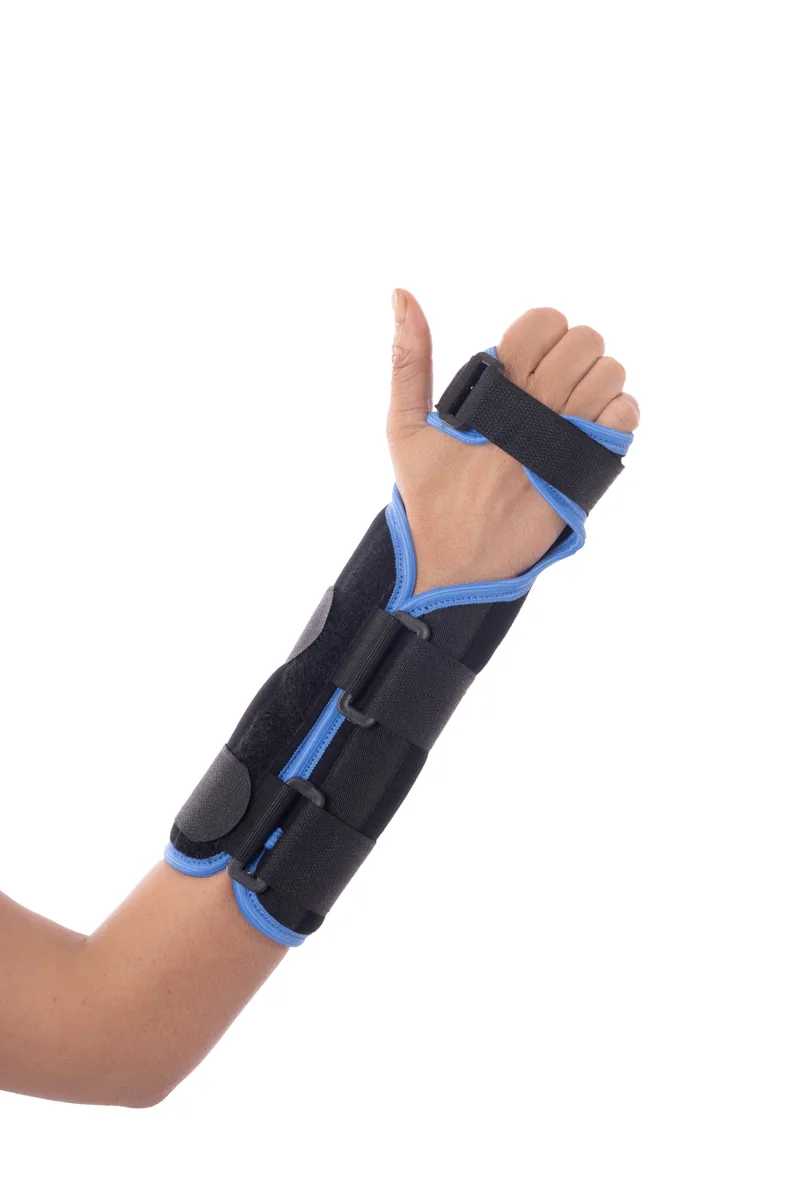

A wrist splint can quiet a flare-up in days. But splinting a wrist that has the wrong setup is like putting a bandage on a leak — it works until you take the bandage off. Run this five-point audit before you buy anything.
1. Your wrists should be flat, not bent
Look down at your hands as you type. If your wrists arch up or droop down, your tendons are working under tension on every keystroke. Lower your chair, raise your keyboard, or both — until your wrists float in a perfectly neutral line.
2. Your mouse is too far from your keyboard
Reaching for the mouse repeats the same shoulder-and-wrist motion thousands of times a day. Pull the mouse closer or switch to a tenkeyless keyboard so you don't have to vault over the number pad.
3. You're gripping the mouse like a tennis racket
A relaxed grip uses surface contact, not force. If your knuckles are white when you click, you're feeding the same forearm tendon that gets inflamed in tennis elbow.
4. You haven't broken in months
Tendons heal between use, not during it. A 60-second wrist circle every 30 minutes is more therapeutic than 10 minutes of stretching at the end of the day.
5. The splint comes last, not first
When you've done all four of the above and the pain is still there, then a wrist cock-up splint at night (worn during sleep, not work) is the right call. The neutral position lets the median nerve decompress for eight hours straight.
Liked this? Get the full Posture Playbook.
A 28-page science-backed guide to sitting, sleeping and moving through a 9-to-5. Built on Harvard Health & Mayo Clinic research.
Get the Free Guide